10 Essential & Proven Criteria for Comparing and Selecting Building Stones
In this article, You will read

Comparing and Selecting Building Stones

Choosing the right building stone requires a multi-dimensional approach that considers technical, aesthetic, environmental, and economic factors.
The following framework presents a comprehensive guideline for evaluating and comparing natural stones used in architecture and construction.

 

Key Criteria for Comparing and Selecting Building Stones

Defining Application and Environmental Conditions

Before anything else, the final use and installation environment must be identified:

  • Installation area: façade, indoor/outdoor flooring, stairs, lobby, pool, landscape, etc.
  • Environmental conditions: temperature, humidity, wet–dry cycles, salinity, heavy traffic, and exposure to cleaning chemicals.

Importance: This step determines which tests, standards, and acceptance limits are required for technical approval.


Physical & Mechanical Properties

Reliable laboratory test data form the foundation of all engineering decisions.
Key indicators include:

  • Density & Water Absorption (ASTM C97): predict behavior under humidity and freeze–thaw cycles.
  • Compressive Strength (ASTM C170): defines the stone’s ability to bear vertical loads.
  • Flexural Strength & Modulus of Rupture (ASTM C880 / C99): measure bending resistance for slabs and load-bearing spans.
  • Abrasion Resistance (ASTM C1353): critical for high-traffic flooring areas.
  • Freeze–Thaw Durability (EN 12371): evaluates resistance to freezing and thawing damage.

Execution note: Always request the raw test data from the supplier and verify the test date and validity.


Surface Safety & Slip Resistance

For both indoor and outdoor floors, slip resistance must comply with international standards:

  • Europe: EN 16165 (replacing BS 7976).
  • USA: ANSI A326.3.

Testing should cover dry, wet, and oily conditions according to actual usage.


Chemical & Salt Durability

  • Resistance to acidic and alkaline cleaners.
  • Resistance to salt exposure, pool chlorine, or seawater.
  • Relevant tests: EN 12371 and water-absorption index.


  • Aesthetic & Geological Features
  • Color and Uniformity: stability of tone across large installations.
  • Texture and Structure: uniform or varied (cloudy, fossil, veined, or wavy).
  • Patterns: ability to apply book-match or four-match designs.
  • Finishes: Polished, Honed, Brushed, Flamed, Leathered, tumbled — each affects appearance, slip resistance, and maintenance.
  • Anisotropy & Layering: directional properties affecting strength and durability.


Compatibility with Installation Systems

  • Dry cladding / anchorage systems: ASTM C1354 (Anchorage Test).
  • Mortar or cement-bed installation: ASTM C482 (Bond Strength).

Stone selection must correspond with the chosen installation system and structural design.


Mock-Up & Quality Control (QC)

  • Full-scale mock-up panels should be built to evaluate color, joints, book-match patterns, and finish.
  • Final acceptance should be based on on-site QC and approved mock-ups.


Sustainability & Green Standards

  • Environmental certifications: ANSI/NSC 373 or the updated ANSI/NSI 373-2019.
  • Supporting documents: EPD (Environmental Product Declaration) and LCA (Life-Cycle Assessment) for carbon-footprint review.

Sustainability adds measurable value to both project and brand reputation.


Supply Continuity, Uniformity & Dimensions

  • Quarry and factory production capacity.
  • Color stability between consecutive shipments.
  • Waste ratio and maximum block/slab/tile dimensions.
  • Lead Time and transportation risks.

These operational factors can be as decisive as laboratory performance results.


Life-Cycle Cost (LCC)

Beyond the purchase price, include:

  • Waterproofing and periodic maintenance costs.
  • Cleaning and potential restoration costs.
  • Long-term aesthetic durability.

Selecting the proper finish can significantly reduce long-term maintenance expenses.
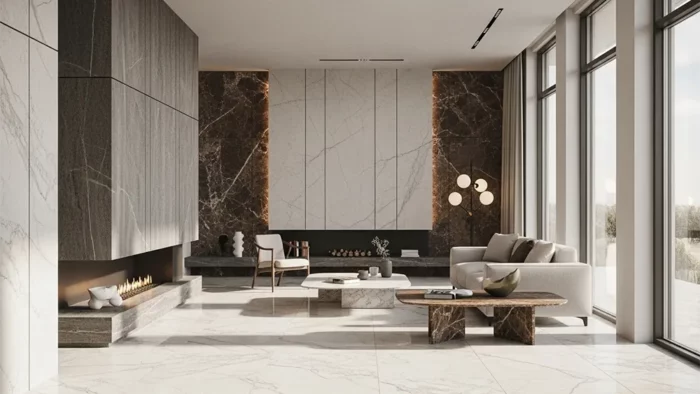
Glossary of Technical Terms

  • Application & Environment: intended use and surrounding conditions defining technical requirements.
  • Density: mass per volume, indicating compactness and strength.
  • Water Absorption (ASTM C97): percentage of water absorbed; key for freeze–thaw resistance.
  • Compressive Strength (ASTM C170): load-bearing capacity under vertical pressure.
  • Flexural Strength (ASTM C880 / C99): bending resistance for slabs and spans.
  • Modulus of Rupture: maximum stress before fracture.
  • Abrasion Resistance (ASTM C1353): surface wear resistance for heavy traffic.
  • Freeze–Thaw Resistance (EN 12371): ability to withstand repeated freezing cycles.
  • Slip Resistance: surface friction value against slipping.
  • Pendulum Test (BS 7976 / EN 16165): European method measuring slip potential.
  • ANSI A326.3: U.S. standard for hard-surface slip performance.
  • Chemical Durability: resistance to acids, alkalis, and detergents.
  • Salt Crystallization: salt-induced deterioration through pore crystallization.
  • Veining: natural lines or patterns in the stone affecting both beauty and structure.
  • Anisotropy: directional variation of mechanical properties.
  • Finish: surface treatment (Polished, Honed, Brushed, Flamed, Leathered, Tumbled).
  • Book Match: mirror placement of two slabs to form a symmetrical pattern.
  • Four Match: arrangement of four slabs to create a unified four-way design.
  • Dry Cladding: mechanical façade installation without mortar.
  • Anchorage Test (ASTM C1354): measures stone anchoring strength in façade systems.
  • Bond Strength (ASTM C482): evaluates adhesion to cement or mortar.
  • Mock-Up: full-scale sample used for visual and quality approval.
  • QC (Quality Control): process ensuring uniformity and compliance.
  • EPD: verified environmental impact statement for a product.
  • LCA: assessment of total environmental impact throughout life cycle.
  • LCC: total cost over a product’s life, including maintenance and repair.
  • Lead Time: duration from order to delivery, including extraction and shipping.

Frequently Asked Questions (FAQ)

Section 1 – Application & Environment

  1. Why is it necessary to define location and conditions before choosing a stone?
    Because the installation area and environment determine which technical standards, tests, and acceptance limits are needed. For example, exterior façades or pool areas face humidity, salinity, and temperature cycles that demand different durability and slip-resistance levels than indoor walls.
  2. Which stones are best suited for cold and freeze-prone regions?
    Stones with low-water absorption and high freeze–thaw resistance (EN 12371) — such as dense granite, compact limestone, or quartzite — perform best in freezing climates.
  3. Can an interior stone be used outdoors?
    Not necessarily. Interior stones often lack freeze–thaw durability, UV resistance, or chemical stability required for outdoor exposure. Always verify the technical test data before exterior use.

Section 2 – Physical & Mechanical Properties

  1. Why are water absorption and density so important?
    They indicate how the stone behaves under humidity and temperature changes.
  • Low absorption + high density → better resistance to freeze–thaw damage, staining, and salt attack.
  • High absorption → higher risk of cracking and weathering.
  1. What is the role of compressive strength in a project?
    It measures the stone’s ability to bear vertical loads (ASTM C170). Essential for columns, base cladding, or any load-bearing application.
  2. Where is flexural strength most critical?
    In slabs, stairs, façades, and large-span panels that experience bending or wind pressure. Tests like ASTM C880 / C99 assess this property.
  3. Why is abrasion resistance vital for high-traffic floors?
    Because it measures how well the surface resists wear and scratching (ASTM C1353). High abrasion resistance ensures long-term durability in malls, lobbies, or public walkways.
  4. How can the validity of test reports be confirmed?
    By requesting the original lab data, verifying the test date, standard (ASTM/EN), and ensuring the tests are performed by accredited laboratories. Outdated or non-certified results are unreliable.

Section 3 – Slip Safety

  1. What does the Pendulum Test measure?
    It measures the surface friction (slip potential) using a swinging pendulum under dry, wet, or oily conditions — showing how slippery a stone surface is.
  2. What’s the difference between EN 16165 (EU) and ANSI A326.3 (US)?
    Both measure slip resistance but use different testing procedures and classification systems:
  • EN 16165 (Europe) replaced BS 7976.
  • ANSI A326.3 (USA) defines Dynamic Coefficient of Friction (DCOF).
  1. Are polished surfaces always slippery?
    Polished stones tend to have lower friction, especially when wet, but not all are unsafe. Slip resistance depends on finish type and environment — honed, brushed, or leathered surfaces often provide better traction.

Section 4 – Chemical & Salt Durability

  1. How do cleaning chemicals affect stone surfaces?
    Acidic or alkaline cleaners can etch, dull, or discolor natural stones, especially marble and limestone. Proper chemical resistance testing is required.
  2. Which stones perform best in pools or saline environments?
    Stones with low porosity and high salt/chlorine resistance, like granite, basalt, or certain compact limestones tested under EN 12371, are ideal.
  3. How does salt crystallization damage stone?
    When saline water evaporates, salts crystallize inside pores, creating internal pressure that leads to flaking, scaling, or disintegration over time.

Section 5 – Aesthetic & Structural Aspects

  1. What is the difference between Book-Match and Four-Match patterns?
  • Book-Match: two adjoining slabs are mirrored to form a symmetrical design.
  • Four-Match: four slabs arranged to create a unified, four-way pattern — ideal for feature walls or floors.
  1. Do veins or fossils weaken a stone, or are they purely aesthetic?
    They are mostly aesthetic but can affect structure if the veins are open, filled, or run directionally (anisotropy). Strong veining may reduce flexural strength.
  2. Which finishes balance beauty and slip-resistance for heavy-use areas?
    Honed, brushed, leathered, tumbled, or flamed finishes — they reduce gloss while maintaining natural texture and safe slip performance.

Section 6 – Installation & Quality Control

  1. What is the difference between mortar installation and dry anchorage systems?
  • Mortar installation (ASTM C482): stones are bonded to substrate using cement or adhesive.
  • Dry anchorage (ASTM C1354): mechanical fixing system (clips, anchors) used mainly for façades without mortar.
  1. Why must a mock-up be prepared before final installation?
    To verify real appearance, joints, pattern alignment, and finish quality before mass production. It ensures client approval and reduces costly on-site errors.
  2. How does quality control (QC) influence stone selection?
    QC ensures color uniformity, dimensional accuracy, and defect-free finishing — verifying that delivered stone matches approved samples and technical requirements.

Section 7 – Sustainability & Environment

  1. What does the ANSI/NSC 373 standard cover?
    It certifies sustainably quarried and processed natural stone, evaluating environmental, social, and health impacts — including water use, energy, and site management.
  2. What information do EPD and LCA documents provide?
  • EPD (Environmental Product Declaration): verified data on a product’s environmental impact.
  • LCA (Life-Cycle Assessment): analyzes total impact from extraction to disposal (carbon footprint, energy, emissions).
  1. Why is carbon footprint an important selection factor?
    Because it reflects a stone’s environmental responsibility — lower emissions improve sustainability scores and project reputation in green certifications (LEED, BREEAM).

Section 8 – Supply & Life-Cycle Cost

  1. Why is quarry and factory capacity important in stone selection?
    It guarantees consistent supply, color uniformity, and large-scale availability — essential for projects requiring long-term or phased deliveries.
  2. What does “Lead Time” mean, and how does it affect project scheduling?
    Lead time = the total duration from order to delivery, including quarrying, cutting, finishing, and transport. Long lead times can delay project progress.
  3. Why should Life Cycle Cost (LCC) be considered alongside the initial price?
    Because the true cost includes maintenance, cleaning, and restoration over time — a cheaper stone may cost more long-term if it requires frequent repairs.
  4. Which finish types help reduce long-term maintenance costs?
    Honed, leathered, or brushed finishes — they hide scratches, resist stains better than polished surfaces, and reduce the need for periodic re-polishing.


 

Ask Price

Name(Required)
Product Details
SKU Code
خطا: محصول معتبر یافت نشد (ID: 35748, Type: post)
Internal reference
Product Title
10 Essential & Proven Criteria for Comparing and Selecting Building Stones
Public name
Cut Broken Finish
A structured, natural-looking surface with controlled broken grooves that softens reflections and adds depth to façades and feature walls.

WHAT THIS FINISH DOES

Soft, leather-like texture
In a cut broken finish, the stone is first sawn into slabs, then the face is worked with a combination of machine and hand tools to create a field of controlled grooves and broken ridges. Instead of a flat, polished surface, you get a matte, non-reflective texture that feels natural and architectural at the same time. Light catches the small steps and fractures, giving the stone more depth and a handcrafted character.
Textured, non-polished surface
Natural broken grooves
Designed for facades

BEST PLACED FOR

Typical applications

this as a design guide only-final suitability is confirmed for each project.

Exterior facades
Architectural skin
Ideal for external cladding where you want strong shadows, natural texture and a less reflective, more monolithic appearance.
Feature interior walls
Statement surfaces
Perfect behind reception desks, stair voids or living spaces where the broken pattern adds movement and depth to the space.
Entrance & landscape walls

Indoor–outdoor

Well suited to boundary walls, entry portals and garden elements that need a durable, sculpted stone texture.

Project-specific guidance

Cut broken (کات بروکن) finishes behave differently on each stone type, from marble and travertine to Chinese and crystal stones. Use this pop-up as a visual and performance guide only. Final panel thickness, joint design and fixing recommendations will be detailed in your Karimi Stone quotation and technical documentation.
Bush Hammered Finish
A highly textured, non-slip surface created by controlled hammer impacts, giving the stone a natural, weathered character for demanding outdoor conditions.

WHAT THIS FINISH DOES

Deep texture, strong performance

In a bush hammered finish, a head fitted with multiple diamond or carbide points repeatedly strikes the stone surface. These impacts chip tiny craters 1–3 mm deep, breaking up the smooth face into a rugged, non-slip texture. The result is a naturally matte, highly tactile surface that feels solid underfoot and stands up to tough weather and heavy use.

High slip resistance
Rugged outdoor texture
Visually natural & matte

BEST PLACED FOR

Typical applications

this as a design guide only-final suitability is confirmed for each project.

Exterior stairs & entries
High traffic
Ideal for external steps, landings and building thresholds where you need extra grip in wet, dusty or icy conditions.
Public paths & plazas
Urban outdoor
Performs well on pavements, plazas and circulation areas exposed to rain and heavy pedestrian movement.
Driveways & ramps
Sloped surfaces
Recommended for sloped vehicle areas and access ramps where additional texture helps reduce the risk of slipping.

Project-specific guidance

Bush hammered finishes behave differently on each stone, depending on density, thickness and mineral structure. Use this view as a visual and performance guide only. Detailed thickness requirements, edge treatment options and any bush hammered + brushed combinations are confirmed on your Karimi Stone quotation and technical documents.
Brushed & Tumbled Finish
A character-rich surface that combines a softly brushed texture with gently worn, rounded edges for an antique yet refined look.

WHAT THIS FINISH DOES

Soft, leather-like texture
The tumbled process softly wears back edges and corners, creating a rounded, timeworn profile with an antique feel. Brushing then moves across the surface with wire brushes, opening the softer areas and polishing the harder minerals. Together, they create a stone that feels naturally aged, gently textured and visually calm, with no sharp edges under hand or bare feet.
Antique, lived-in character
Softened edges & corners
Textured, low-glare surface

BEST PLACED FOR

Typical applications

this as a design guide only-final suitability is confirmed for each project.

Pool edges & terraces
Wet outdoor
Rounded edges and textured faces make this finish ideal around pools, terraces and steps where bare feet and slip-resistance both matter.
Garden paths & courtyards
Landscapes
Delivers a softly aged, European-style feel for pathways, courtyards and intimate outdoor rooms with a relaxed, informal character.
Feature entries & stairs
High touch
Perfect for entrance landings, external stairs and thresholds where you want a tactile, durable finish that looks established from day one.

Project-specific guidance

Brushed & tumbled finishes will express differently on each stone, depending on hardness, colour and veining. Use this view as a visual guide only – detailed performance, edge details and format options are confirmed on your Karimi Stone quotation and technical documentation.

Brushed (leathered) Finish

A softly textured, low-glare surface created with wire brushes – similar to natural leather under hand, with gentle movement across the stone.

WHAT THIS FINISH DOES

Soft, leather-like texture
Instead of polishing with hard abrasives, wire brushes work across the stone surface. They ease into the softer veins and tiny pores, gently deepening them while polishing the harder areas. The result is a lightly uneven, tactile surface that feels soft and natural rather than glossy.

Leather-like touch

Low-glare, refined look

Subtle texture variation

BEST PLACED FOR

Typical applications

this as a design guide only-final suitability is confirmed for each project.

Living areas

Interior floors

A warm, tactile alternative to high-gloss finishes in lounges and family spaces where you want softness underfoot.
Feature walls

Vertical surfaces

Highlights the natural movement of the stone on fireplaces, TV walls and entry moments without strong reflection.
 
Covered terraces

Indoor–outdoor

Ideal for semi-outdoor rooms and verandas where you want a gentle texture that transitions smoothly from inside to out.

Project-specific guidance

Brushed (leathered) finishes will look and feel slightly different on each stone, depending on colour, density and veining. Use this view as a visual guide only – final recommendations and performance details are provided on your Karimi Stone quotation and technical documentation.

Acid-washed finish

A honed stone treated with acid to create a softly etched, slightly coarse surface – adding slip resistance while keeping a natural, organic look.
WHAT THIS FINISH DOES
Subtle texture, more grip
In an acid-washed finish, a honed surface is treated with acid to lightly etch the stone. Different minerals react at different rates, so the face becomes gently irregular, adding a natural, tactile feel and improved slip resistance.
Etched, natural look

Etched, natural look

Etched, natural look

BEST PLACED FOR
Typical applications
Use this as a design guide only – final suitability is confirmed for each project.
Terraces & patios
Outdoor living
Comfortable underfoot with enough grip for entertaining spaces exposed to light rain and morning dew.
Garden paths

Circulation

A refined alternative to rougher textures where you still want slip resistance in planted landscapes.
Poolside surrounds
Wet areas
Suited to pool edges and adjacent walkways where occasional splashing calls for extra control and safety.

Project-specific guidance

Acid-washed performance and appearance vary with stone type, colour and mineral content. Use this view as a visual guide only – detailed slip-resistance values and final recommendations are provided on your Karimi Stone quotation and technical documentation.

Edge Finish

Explore Karimi Stone edge styles and see how each profile changes the character of your tiles, from crisp architectural cuts to softly worn, tactile edges.

HOW IT WORKS
Visual guide, not a strict spec
Use this pop-up as a quick design guide. Shapes, softness and texture are shown in a simplified way – your final edge will respond to the exact stone, thickness and project details.
EDGE FAMILY OVERVIEW
Four ways to finish a Karimi Stone edge

Sawn

Split-edge

Tumbled

Chiseled

From expressive and hand-worked to minimal and precise.

HIGHLIGHTED PROFILE

FOCUS: Sawn EDGE

Straight, precise cuts for modern detailing
Sawn, straight-cut edges with a precise, modern line – perfect for minimal façades, slim coping and any detailing where you want the stone to feel tailored and quietly refined.
Contemporary facades
Steps & landings
Interior transitions

EDGE FAMILY OVERVIEW

Explore alternative profiles
Split-edge
Rugged & bold
Rough, fractured faces with deeper shadows, perfect for more rustic walls and strong landscape gestures.
Chiseled
Expressive texture
Hand-worked breaks and small variations that give steps and cappings a bold, architectural outline.
Tumbled
Soft & relaxed
Gently rounded, touch-friendly edges that feel calm under hand and barefoot – suited to pools and terraces.
Project-specific confirmation
Availability and exact expression of each edge profile depend on stone type, thickness and fabrication method. Final details are always documented on your Karimi Stone quotation and approved workshop drawings before production.

Edge Finish

Explore Karimi Stone edge styles and see how each profile changes the character of your tiles, from crisp architectural cuts to softly worn, tactile edges.

HOW IT WORKS
Visual guide, not a strict spec
Use this pop-up as a quick design guide. Shapes, softness and texture are shown in a simplified way – your final edge will respond to the exact stone, thickness and project details.
EDGE FAMILY OVERVIEW
Four ways to finish a Karimi Stone edge

Split-edge

Sawn

Tumbled

Chiseled

From expressive and hand-worked to minimal and precise.

HIGHLIGHTED PROFILE

FOCUS: Split-edge EDGE

Rough, fractured faces with deeper shadows
Split-edge, rugged & bold, with rough, fractured faces that catch light and deepen shadows – ideal for rustic walls, feature plinths and landscape gestures that need more presence.
Pool coping & surrounds
Family terraces
Barefoot circulation areas

EDGE FAMILY OVERVIEW

Explore alternative profiles
Sawn
Clean & minimal

Straight, crisp lines that keep attention on form and alignment. Ideal for contemporary interiors and tight detailing.

Chiseled
Expressive texture
Hand-worked breaks and small variations that give steps and cappings a bold, architectural outline.
Tumbled
Soft & relaxed
Gently rounded, touch-friendly edges that feel calm under hand and barefoot – suited to pools and terraces.
Project-specific confirmation
Availability and exact expression of each edge profile depend on stone type, thickness and fabrication method. Final details are always documented on your Karimi Stone quotation and approved workshop drawings before production.

Edge Finish

Explore Karimi Stone edge styles and see how each profile changes the character of your tiles, from crisp architectural cuts to softly worn, tactile edges.

HOW IT WORKS
Visual guide, not a strict spec
Use this pop-up as a quick design guide. Shapes, softness and texture are shown in a simplified way – your final edge will respond to the exact stone, thickness and project details.
EDGE FAMILY OVERVIEW
Four ways to finish a Karimi Stone edge

Tumbled

Sawn

Split-edge

Chiseled

From expressive and hand-worked to minimal and precise.

HIGHLIGHTED PROFILE

FOCUS: Tumbled EDGE

Gently rounded, touch-friendly edges
Tumbled, soft & relaxed, gently rounded, touch-friendly edges that feel calm under hand and barefoot – suited to pools, terraces and any space where comfort and ease are the priority.
Pool coping & surrounds
Family terraces
Barefoot circulation areas

EDGE FAMILY OVERVIEW

Explore alternative profiles
Sawn
Clean & minimal

Straight, crisp lines that keep attention on form and alignment. Ideal for contemporary interiors and tight detailing.

Chiseled
Expressive texture
Hand-worked breaks and small variations that give steps and cappings a bold, architectural outline.
Split-edge
Rugged texture

Irregular, fractured faces with deep shadow – perfect for more rustic walls and bold landscape gestures.

Project-specific confirmation
Availability and exact expression of each edge profile depend on stone type, thickness and fabrication method. Final details are always documented on your Karimi Stone quotation and approved workshop drawings before production.

Edge Finish

Explore Karimi Stone edge styles and see how each profile changes the character of your tiles, from crisp architectural cuts to softly worn, tactile edges.

HOW IT WORKS
Visual guide, not a strict spec
Use this pop-up as a quick design guide. Shapes, softness and texture are shown in a simplified way – your final edge will respond to the exact stone, thickness and project details.
EDGE FAMILY OVERVIEW
Four ways to finish a Karimi Stone edge

Chiseled

Sawn

Split-edge

Tumbled

From expressive and hand-worked to minimal and precise.

HIGHLIGHTED PROFILE

FOCUS: CHISELED EDGE
Expressive, hand-crafted edge for statement pieces

A chiselled finish introduces controlled irregularity along the tile perimeter, catching light and shadow for a more dramatic, crafted feel. Ideal for pool coping, stair nosings and feature steps.

Bold character
Feature details
Outdoor friendly

EDGE FAMILY OVERVIEW

Explore alternative profiles
Sawn
Clean & minimal

Straight, crisp lines that keep attention on form and alignment. Ideal for contemporary interiors and tight detailing.

Tumbled
Soft & relaxed

Gently rounded, touch-friendly edges that feel calm under hand and barefoot – suited to pools and terraces.

Split-edge
Rugged texture

Irregular, fractured faces with deep shadow – perfect for more rustic walls and bold landscape gestures.

Project-specific confirmation
Availability and exact expression of each edge profile depend on stone type, thickness and fabrication method. Final details are always documented on your Karimi Stone quotation and approved workshop drawings before production.

Slip Rating & Wet Pendulum Guide

A concise overview of P1–P5 slip ratings so you can align each Karimi Stone finish with the right space, moisture level and safety expectation.

OVERVIEW

P1 → P5 safety band
P1 P2 P3 P4 P5
What the Wet Pendulum Test (WPT) tells you
The WPT measures how slippery a surface becomes when wet. Each finish is given a P rating from P1 (higher slip risk) through to P5 (maximum grip). As the number increases, the expected slip resistance also increases.

RATING SCALE SNAPSHOT

From higher slip risk to maximum grip
Each Karimi Stone P icon below is your quick visual code before checking detailed applications.

P1 → P5  Left = smoother | Right = more textured

P1

Dry circulation

Higher slip risk

For dry-only walkways and light traffic areas where water is not expected on the surface.

P2

Light splash

Occasional moisture
Bathrooms, small kitchens and transition areas that see brief, easily managed water.
P3

Everyday wet public

Balanced grip
Entries, amenities, undercover car parks and fresh food retail where wet floors are common.
P4

High exposure

Wet, high traffic
Pool surrounds, communal showers and external ramps under 1:14 where water is constant.
P5

Maximum grip

Highest safety band

Commercial kitchens, covered loading docks and pool ramps or stairs leading into water.

HOW TO READ THIS POPUP

Start with water, movement and consequence
Consider how wet the floor can get, how quickly people move, and how critical a slip could be. Then use the cards below to align each area of your project with a suitable P rating before you select a Karimi Stone finish.

TYPICAL APPLICATIONS

P1 – dry circulation
Higher slip risk when wet

P1
For areas intended to remain dry with controlled walking speeds – such as supermarket aisles, separate shops inside centres or dry lobby and corridor zones.
Retail aisles
Dry-only entries
Light traffic

P2 – light splash
Transitional & semi-wet areas

P2
For spaces where occasional water is expected but quickly managed – like hotel bathrooms, apartment kitchens, laundries and transition zones between wet and dry areas.
Hotel bathrooms
Apartment kitchens
Laundries

P3 – regularly wet public
Balanced everyday grip

P3
Used where wet conditions are common – entries and access ways, toilet facilities in public buildings, undercover car parks and fresh food retail areas.
Public entries
Toilet facilities
Undercover parking

P4 – high exposure
Wet, high traffic environments

P4
Selected for consistently wet and busy areas such as pool surrounds, communal showers, external ramps under 1:14 and service zones behind bars.
Pool surrounds
Communal showers
Light traffic

P5 – maximum grip
Demanding commercial use

P5
For the most demanding applications: commercial kitchens, loading docks under cover, steep external ramps, swimming pool ramps and stairs leading into water.
Commercial kitchens
Loading docks
Pool ramps & stairs
TEST STATUS CODES

Where a P rating is not shown

For the most demanding applications: commercial kitchens, loading docks under cover, steep external ramps, swimming pool ramps and stairs leading into water.

?

N/T

No Wet Pendulum slip testing has yet been performed on this surface finish.

N/A

Wet Pendulum testing is not applicable or cannot be performed for this surface format.

W

WPT

Indicates that the Wet Pendulum Test method has been used to determine the rating.

Always refer to the specific data sheet for each Karimi Stone product to see which of these codes or P ratings apply.

Information disclaimer

This guide is a general summary only and does not constitute legal or compliance advice. Slip resistance requirements vary by project, location and use. Always confirm ratings and regulatory obligations with qualified slip-rating and building-compliance professionals before final specification.

Slip Rating & Wet Pendulum Guide

A concise overview of P1–P5 slip ratings so you can align each Karimi Stone finish with the right space, moisture level and safety expectation.

OVERVIEW

P1 → P5 safety band
P1 P2 P3 P4 P5
What the Wet Pendulum Test (WPT) tells you
The WPT measures how slippery a surface becomes when wet. Each finish is given a P rating from P1 (higher slip risk) through to P5 (maximum grip). As the number increases, the expected slip resistance also increases.

RATING SCALE SNAPSHOT

From higher slip risk to maximum grip
Each Karimi Stone P icon below is your quick visual code before checking detailed applications.

P1 → P5  Left = smoother | Right = more textured

P1

Dry circulation

Higher slip risk

For dry-only walkways and light traffic areas where water is not expected on the surface.

P2

Light splash

Occasional moisture
Bathrooms, small kitchens and transition areas that see brief, easily managed water.
P3

Everyday wet public

Balanced grip
Entries, amenities, undercover car parks and fresh food retail where wet floors are common.
P4

High exposure

Wet, high traffic
Pool surrounds, communal showers and external ramps under 1:14 where water is constant.
P5

Maximum grip

Highest safety band

Commercial kitchens, covered loading docks and pool ramps or stairs leading into water.

HOW TO READ THIS POPUP

Start with water, movement and consequence
Consider how wet the floor can get, how quickly people move, and how critical a slip could be. Then use the cards below to align each area of your project with a suitable P rating before you select a Karimi Stone finish.

TYPICAL APPLICATIONS

P1 – dry circulation
Higher slip risk when wet

P1
For areas intended to remain dry with controlled walking speeds – such as supermarket aisles, separate shops inside centres or dry lobby and corridor zones.
Retail aisles
Dry-only entries
Light traffic

P2 – light splash
Transitional & semi-wet areas

P2
For spaces where occasional water is expected but quickly managed – like hotel bathrooms, apartment kitchens, laundries and transition zones between wet and dry areas.
Hotel bathrooms
Apartment kitchens
Laundries

P3 – regularly wet public
Balanced everyday grip

P3
Used where wet conditions are common – entries and access ways, toilet facilities in public buildings, undercover car parks and fresh food retail areas.
Public entries
Toilet facilities
Undercover parking

P4 – high exposure
Wet, high traffic environments

P4
Selected for consistently wet and busy areas such as pool surrounds, communal showers, external ramps under 1:14 and service zones behind bars.
Pool surrounds
Communal showers
Light traffic

P5 – maximum grip
Demanding commercial use

P5
For the most demanding applications: commercial kitchens, loading docks under cover, steep external ramps, swimming pool ramps and stairs leading into water.
Commercial kitchens
Loading docks
Pool ramps & stairs
TEST STATUS CODES

Where a P rating is not shown

For the most demanding applications: commercial kitchens, loading docks under cover, steep external ramps, swimming pool ramps and stairs leading into water.

?

N/T

No Wet Pendulum slip testing has yet been performed on this surface finish.

N/A

Wet Pendulum testing is not applicable or cannot be performed for this surface format.

W

WPT

Indicates that the Wet Pendulum Test method has been used to determine the rating.

Always refer to the specific data sheet for each Karimi Stone product to see which of these codes or P ratings apply.

Information disclaimer

This guide is a general summary only and does not constitute legal or compliance advice. Slip resistance requirements vary by project, location and use. Always confirm ratings and regulatory obligations with qualified slip-rating and building-compliance professionals before final specification.

Slip Rating & Wet Pendulum Guide

A concise overview of P1–P5 slip ratings so you can align each Karimi Stone finish with the right space, moisture level and safety expectation.

OVERVIEW

P1 → P5 safety band
P1 P2 P3 P4 P5
What the Wet Pendulum Test (WPT) tells you
The WPT measures how slippery a surface becomes when wet. Each finish is given a P rating from P1 (higher slip risk) through to P5 (maximum grip). As the number increases, the expected slip resistance also increases.

RATING SCALE SNAPSHOT

From higher slip risk to maximum grip
Each Karimi Stone P icon below is your quick visual code before checking detailed applications.

P1 → P5  Left = smoother | Right = more textured

P1

Dry circulation

Higher slip risk

For dry-only walkways and light traffic areas where water is not expected on the surface.

P2

Light splash

Occasional moisture
Bathrooms, small kitchens and transition areas that see brief, easily managed water.
P3

Everyday wet public

Balanced grip
Entries, amenities, undercover car parks and fresh food retail where wet floors are common.
P4

High exposure

Wet, high traffic
Pool surrounds, communal showers and external ramps under 1:14 where water is constant.
P5

Maximum grip

Highest safety band

Commercial kitchens, covered loading docks and pool ramps or stairs leading into water.

HOW TO READ THIS POPUP

Start with water, movement and consequence
Consider how wet the floor can get, how quickly people move, and how critical a slip could be. Then use the cards below to align each area of your project with a suitable P rating before you select a Karimi Stone finish.

TYPICAL APPLICATIONS

P1 – dry circulation
Higher slip risk when wet

P1
For areas intended to remain dry with controlled walking speeds – such as supermarket aisles, separate shops inside centres or dry lobby and corridor zones.
Retail aisles
Dry-only entries
Light traffic

P2 – light splash
Transitional & semi-wet areas

P2
For spaces where occasional water is expected but quickly managed – like hotel bathrooms, apartment kitchens, laundries and transition zones between wet and dry areas.
Hotel bathrooms
Apartment kitchens
Laundries

P3 – regularly wet public
Balanced everyday grip

P3
Used where wet conditions are common – entries and access ways, toilet facilities in public buildings, undercover car parks and fresh food retail areas.
Public entries
Toilet facilities
Undercover parking

P4 – high exposure
Wet, high traffic environments

P4
Selected for consistently wet and busy areas such as pool surrounds, communal showers, external ramps under 1:14 and service zones behind bars.
Pool surrounds
Communal showers
Light traffic

P5 – maximum grip
Demanding commercial use

P5
For the most demanding applications: commercial kitchens, loading docks under cover, steep external ramps, swimming pool ramps and stairs leading into water.
Commercial kitchens
Loading docks
Pool ramps & stairs
TEST STATUS CODES

Where a P rating is not shown

For the most demanding applications: commercial kitchens, loading docks under cover, steep external ramps, swimming pool ramps and stairs leading into water.

?

N/T

No Wet Pendulum slip testing has yet been performed on this surface finish.

N/A

Wet Pendulum testing is not applicable or cannot be performed for this surface format.

W

WPT

Indicates that the Wet Pendulum Test method has been used to determine the rating.

Always refer to the specific data sheet for each Karimi Stone product to see which of these codes or P ratings apply.

Information disclaimer

This guide is a general summary only and does not constitute legal or compliance advice. Slip resistance requirements vary by project, location and use. Always confirm ratings and regulatory obligations with qualified slip-rating and building-compliance professionals before final specification.

Slip Rating & Wet Pendulum Guide

A concise overview of P1–P5 slip ratings so you can align each Karimi Stone finish with the right space, moisture level and safety expectation.

OVERVIEW

P1 → P5 safety band
P1 P2 P3 P4 P5
What the Wet Pendulum Test (WPT) tells you
The WPT measures how slippery a surface becomes when wet. Each finish is given a P rating from P1 (higher slip risk) through to P5 (maximum grip). As the number increases, the expected slip resistance also increases.

RATING SCALE SNAPSHOT

From higher slip risk to maximum grip
Each Karimi Stone P icon below is your quick visual code before checking detailed applications.

P1 → P5  Left = smoother | Right = more textured

P1

Dry circulation

Higher slip risk

For dry-only walkways and light traffic areas where water is not expected on the surface.

P2

Light splash

Occasional moisture
Bathrooms, small kitchens and transition areas that see brief, easily managed water.
P3

Everyday wet public

Balanced grip
Entries, amenities, undercover car parks and fresh food retail where wet floors are common.
P4

High exposure

Wet, high traffic
Pool surrounds, communal showers and external ramps under 1:14 where water is constant.
P5

Maximum grip

Highest safety band

Commercial kitchens, covered loading docks and pool ramps or stairs leading into water.

HOW TO READ THIS POPUP

Start with water, movement and consequence
Consider how wet the floor can get, how quickly people move, and how critical a slip could be. Then use the cards below to align each area of your project with a suitable P rating before you select a Karimi Stone finish.

TYPICAL APPLICATIONS

P1 – dry circulation
Higher slip risk when wet

P1
For areas intended to remain dry with controlled walking speeds – such as supermarket aisles, separate shops inside centres or dry lobby and corridor zones.
Retail aisles
Dry-only entries
Light traffic

P2 – light splash
Transitional & semi-wet areas

P2
For spaces where occasional water is expected but quickly managed – like hotel bathrooms, apartment kitchens, laundries and transition zones between wet and dry areas.
Hotel bathrooms
Apartment kitchens
Laundries

P3 – regularly wet public
Balanced everyday grip

P3
Used where wet conditions are common – entries and access ways, toilet facilities in public buildings, undercover car parks and fresh food retail areas.
Public entries
Toilet facilities
Undercover parking

P4 – high exposure
Wet, high traffic environments

P4
Selected for consistently wet and busy areas such as pool surrounds, communal showers, external ramps under 1:14 and service zones behind bars.
Pool surrounds
Communal showers
Light traffic

P5 – maximum grip
Demanding commercial use

P5
For the most demanding applications: commercial kitchens, loading docks under cover, steep external ramps, swimming pool ramps and stairs leading into water.
Commercial kitchens
Loading docks
Pool ramps & stairs
TEST STATUS CODES

Where a P rating is not shown

For the most demanding applications: commercial kitchens, loading docks under cover, steep external ramps, swimming pool ramps and stairs leading into water.

?

N/T

No Wet Pendulum slip testing has yet been performed on this surface finish.

N/A

Wet Pendulum testing is not applicable or cannot be performed for this surface format.

W

WPT

Indicates that the Wet Pendulum Test method has been used to determine the rating.

Always refer to the specific data sheet for each Karimi Stone product to see which of these codes or P ratings apply.

Information disclaimer

This guide is a general summary only and does not constitute legal or compliance advice. Slip resistance requirements vary by project, location and use. Always confirm ratings and regulatory obligations with qualified slip-rating and building-compliance professionals before final specification.

Slip Rating & Wet Pendulum Guide

A concise overview of P1–P5 slip ratings so you can align each Karimi Stone finish with the right space, moisture level and safety expectation.

OVERVIEW

P1 → P5 safety band
P1 P2 P3 P4 P5
What the Wet Pendulum Test (WPT) tells you
The WPT measures how slippery a surface becomes when wet. Each finish is given a P rating from P1 (higher slip risk) through to P5 (maximum grip). As the number increases, the expected slip resistance also increases.

RATING SCALE SNAPSHOT

From higher slip risk to maximum grip
Each Karimi Stone P icon below is your quick visual code before checking detailed applications.

P1 → P5  Left = smoother | Right = more textured

P1

Dry circulation

Higher slip risk

For dry-only walkways and light traffic areas where water is not expected on the surface.

P2

Light splash

Occasional moisture
Bathrooms, small kitchens and transition areas that see brief, easily managed water.
P3

Everyday wet public

Balanced grip
Entries, amenities, undercover car parks and fresh food retail where wet floors are common.
P4

High exposure

Wet, high traffic
Pool surrounds, communal showers and external ramps under 1:14 where water is constant.
P5

Maximum grip

Highest safety band

Commercial kitchens, covered loading docks and pool ramps or stairs leading into water.

HOW TO READ THIS POPUP

Start with water, movement and consequence
Consider how wet the floor can get, how quickly people move, and how critical a slip could be. Then use the cards below to align each area of your project with a suitable P rating before you select a Karimi Stone finish.

TYPICAL APPLICATIONS

P1 – dry circulation
Higher slip risk when wet

P1
For areas intended to remain dry with controlled walking speeds – such as supermarket aisles, separate shops inside centres or dry lobby and corridor zones.
Retail aisles
Dry-only entries
Light traffic

P2 – light splash
Transitional & semi-wet areas

P2
For spaces where occasional water is expected but quickly managed – like hotel bathrooms, apartment kitchens, laundries and transition zones between wet and dry areas.
Hotel bathrooms
Apartment kitchens
Laundries

P3 – regularly wet public
Balanced everyday grip

P3
Used where wet conditions are common – entries and access ways, toilet facilities in public buildings, undercover car parks and fresh food retail areas.
Public entries
Toilet facilities
Undercover parking

P4 – high exposure
Wet, high traffic environments

P4
Selected for consistently wet and busy areas such as pool surrounds, communal showers, external ramps under 1:14 and service zones behind bars.
Pool surrounds
Communal showers
Light traffic

P5 – maximum grip
Demanding commercial use

P5
For the most demanding applications: commercial kitchens, loading docks under cover, steep external ramps, swimming pool ramps and stairs leading into water.
Commercial kitchens
Loading docks
Pool ramps & stairs
TEST STATUS CODES

Where a P rating is not shown

For the most demanding applications: commercial kitchens, loading docks under cover, steep external ramps, swimming pool ramps and stairs leading into water.

?

N/T

No Wet Pendulum slip testing has yet been performed on this surface finish.

N/A

Wet Pendulum testing is not applicable or cannot be performed for this surface format.

W

WPT

Indicates that the Wet Pendulum Test method has been used to determine the rating.

Always refer to the specific data sheet for each Karimi Stone product to see which of these codes or P ratings apply.

Information disclaimer

This guide is a general summary only and does not constitute legal or compliance advice. Slip resistance requirements vary by project, location and use. Always confirm ratings and regulatory obligations with qualified slip-rating and building-compliance professionals before final specification.

Colour Variation Guide

A premium, visual overview of how colour movement evolves from calm, uniform surfaces to high-impact, expressive finishes.

Variation scale

Choose a variation level

V4 selected

V0
V1
V2
V3
V4
Calm & uniform
Highly varied
Reading the scale
V0 is almost seamless with minimal tone shifts, while V4 is bold and highly expressive. Use this guide to align the surface movement with the mood of your space.
Variation reference cards

Near-Zero Variation – V0

Ultra-consistent tone with almost no visible shift between pieces. Ideal for gallery-like, minimal interiors where the surface should visually disappear.

Soft Variation – V1

Delicate, low-contrast changes gently break up the surface. A refined choice for calm kitchens, ensuites, and open-plan living spaces.

Moderate Variation – V2

Balanced, natural movement with visible differences in tone. Adds character and depth while staying easy to style with cabinetry and textiles.

Expressive Variation – V3

Stronger contrast from piece to piece with noticeable light and dark areas. Best when you want the surface to act as a key design feature.

High-Drama Variation – V4

Pronounced shifts in hue and tone, creating a richly patterned, statement finish. Ideal for feature walls, dramatic floors, or high-impact spaces.

Colour Variation Guide

A premium, visual overview of how colour movement evolves from calm, uniform surfaces to high-impact, expressive finishes.

Variation scale

Choose a variation level

V3 selected

V0
V1
V2
V3
V4
Calm & uniform
Highly varied
Reading the scale
V0 is almost seamless with minimal tone shifts, while V4 is bold and highly expressive. Use this guide to align the surface movement with the mood of your space.
Variation reference cards

Near-Zero Variation – V0

Ultra-consistent tone with almost no visible shift between pieces. Ideal for gallery-like, minimal interiors where the surface should visually disappear.

Soft Variation – V1

Delicate, low-contrast changes gently break up the surface. A refined choice for calm kitchens, ensuites, and open-plan living spaces.

Moderate Variation – V2

Balanced, natural movement with visible differences in tone. Adds character and depth while staying easy to style with cabinetry and textiles.

Expressive Variation – V3

Stronger contrast from piece to piece with noticeable light and dark areas. Best when you want the surface to act as a key design feature.

High-Drama Variation – V4

Pronounced shifts in hue and tone, creating a richly patterned, statement finish. Ideal for feature walls, dramatic floors, or high-impact spaces.

Colour Variation Guide

A premium, visual overview of how colour movement evolves from calm, uniform surfaces to high-impact, expressive finishes.

Variation scale

Choose a variation level

V2 selected

V0
V1
V2
V3
V4
Calm & uniform
Highly varied
Reading the scale
V0 is almost seamless with minimal tone shifts, while V4 is bold and highly expressive. Use this guide to align the surface movement with the mood of your space.
Variation reference cards

Near-Zero Variation – V0

Ultra-consistent tone with almost no visible shift between pieces. Ideal for gallery-like, minimal interiors where the surface should visually disappear.

Soft Variation – V1

Delicate, low-contrast changes gently break up the surface. A refined choice for calm kitchens, ensuites, and open-plan living spaces.

Moderate Variation – V2

Balanced, natural movement with visible differences in tone. Adds character and depth while staying easy to style with cabinetry and textiles.

Expressive Variation – V3

Stronger contrast from piece to piece with noticeable light and dark areas. Best when you want the surface to act as a key design feature.

High-Drama Variation – V4

Pronounced shifts in hue and tone, creating a richly patterned, statement finish. Ideal for feature walls, dramatic floors, or high-impact spaces.

Colour Variation Guide

A premium, visual overview of how colour movement evolves from calm, uniform surfaces to high-impact, expressive finishes.

Variation scale

Choose a variation level
V1 selected
V0
V1
V2
V3
V4
Calm & uniform
Highly varied
Reading the scale
V0 is almost seamless with minimal tone shifts, while V4 is bold and highly expressive. Use this guide to align the surface movement with the mood of your space.
Variation reference cards

Near-Zero Variation – V0

Ultra-consistent tone with almost no visible shift between pieces. Ideal for gallery-like, minimal interiors where the surface should visually disappear.

Soft Variation – V1

Delicate, low-contrast changes gently break up the surface. A refined choice for calm kitchens, ensuites, and open-plan living spaces.

Moderate Variation – V2

Balanced, natural movement with visible differences in tone. Adds character and depth while staying easy to style with cabinetry and textiles.

Expressive Variation – V3

Stronger contrast from piece to piece with noticeable light and dark areas. Best when you want the surface to act as a key design feature.

High-Drama Variation – V4

Pronounced shifts in hue and tone, creating a richly patterned, statement finish. Ideal for feature walls, dramatic floors, or high-impact spaces.

Colour Variation Guide

A premium, visual overview of how colour movement evolves from calm, uniform surfaces to high-impact, expressive finishes.

Variation scale

Choose a variation level

V0 selected

V0
V1
V2
V3
V4
Calm & uniform

Highly varied

Reading the scale
V0 is almost seamless with minimal tone shifts, while V4 is bold and highly expressive. Use this guide to align the surface movement with the mood of your space.
Variation reference cards

Near-Zero Variation – V0

Ultra-consistent tone with almost no visible shift between pieces. Ideal for gallery-like, minimal interiors where the surface should visually disappear.

Soft Variation – V1

Delicate, low-contrast changes gently break up the surface. A refined choice for calm kitchens, ensuites, and open-plan living spaces.

Moderate Variation – V2

Balanced, natural movement with visible differences in tone. Adds character and depth while staying easy to style with cabinetry and textiles.

Expressive Variation – V3

Stronger contrast from piece to piece with noticeable light and dark areas. Best when you want the surface to act as a key design feature.

High-Drama Variation – V4

Pronounced shifts in hue and tone, creating a richly patterned, statement finish. Ideal for feature walls, dramatic floors, or high-impact spaces.


تست آونگ یا Pendulum Test روشی استاندارد برای سنجش میزان لغزندگی سطوح سنگ و سرامیک است، خصوصاً در حالت خیس که خطرش بیشتر می‌شود. در این آزمون، دستگاهی با پاشنه‌ی لاستیکی شبیه‌سازی‌شده روی سطح خیس کشیده می‌شود و بر اساس میزان انرژی از دست‌رفته، عددی به نام BPN یا SRV به‌عنوان شاخص مقاومت در برابر لغزش ارائه می‌شود. عواملی مانند زبری یا صافی سطح، وجود گردوغبار، آب یا روغن و همچنین دمای محیط (خصوصاً در شرایط یخ‌زدگی) بر نتیجه اثر می‌گذارند. این تست به‌طور گسترده در صنعت سنگ ساختمانی برای ارزیابی ایمنی سطوح کف، فضاهای بیرونی و محل‌های پرتردد استفاده می‌شود.

P1

P2

P3

P4

P5

→ High Slip Risk 

Moderate Slip Risk

→ Moderate Slip Risk 

→ Low Slip Risk 

→ Low Slip Risk

سلب مسئولیت اطلاعاتی

  • مطالب ارائه‌شده جنبه عمومی و آموزشی دارند.
  • این محتوا توصیه حقوقی یا فنی قطعی نیست و نباید صرفاً به آن تکیه شود.
  • برای مشاوره فنی باید به متخصصان دارای صلاحیت مراجعه شود.
  • Karimi Stone  هیچ مسئولیتی در قبال خطاها، کمبودها یا خسارات ناشی از استفاده از این اطلاعات نمی‌پذیرد.
  • کاربران باید تحقیقات مستقل خود را برای اطمینان از صحت اطلاعات انجام دهند.

WPT

LOCATION

محوطه‌ها و رمپ‌های بیرونی

P5

رمپ‌های بیرونی شامل راه‌های دارای شیب، ورودی پارکینگ‌ها، پیاده‌روها و … با شیب بیشتر از 1:14

P4

رمپ‌ها و پیاده‌روهای بیرونی با شیب کمتر از 1:14
محوطه‌های باز تجاری مانند بازارها
پارکینگ‌های روباز
ستون‌نماهای بیرونی، پیاده‌روها، گذرگاه‌های عابر پیاده
بالکن‌ها، ایوان‌ها، پارکینگ‌های روباز، حیاط‌ها، بام‌ها

P3

پارکینگ‌های سرپوشیده

هتل‌ها، ادارات، ساختمان‌های عمومی، مدارس و مهدکودک‌ها

P3

فضاهای خیس (Wet area) سرویس‌های بهداشتی در دفاتر، هتل‌ها و مراکز خرید

P2

فضاهای گذار و یا فضاهایی بین فضای خشک و خیس (Transitional area) حمام‌های آپارتمان‌های هتل، سرویس‌های بهداشتی و دستشویی‌ها

P1

فضاهای خشک (Dry area)

Request Quote

Reference Catalog
Stone Size Guide
Standard slab, tile, pattern, and step sizes to help plan your takeoffs and orders. Dimensions shown in centimeters unless noted.

Notes
• Slab tolerance: ±20 mm on length/width, thickness as listed. • Tile thickness is nominal; verify per batch. • Custom sizes available upon request.

Srandard Slab

Dimensions (cm)

Thickness

(240 x 140) ±20

2 cm

(240 x 140) ±20

3 cm

Big Slab

Dimensions (cm)

Thickness

(280 x 180) ±20

2 cm

(280 x 180) ±20

3 cm

Tolerance applies to length and width. Thickness tolerance available on request.

Large Format

91.5 × 61

1.5/2 cm

61 × 61

1.5 cm

Medium

81.2 × 40.6

1.5 cm

61 × 40.6

1.2 cm

61 × 30.5

1.2 cm

Small

40.6 × 40.6

1.2 cm

20.3 × 20.3

1.2 cm

10 × 10

1.2 cm

Other finishes and bevels available. Sizing listed as length × width × thickness.

Classic Pattern

PATTERN SET

1.2 cm

Modular layout supplied as a set. Contact for sheet map.

OPS Pattern

OPS SET

1.5/2 cm

Modular layout supplied as a set. Contact for sheet map.

Custom

Per spec

0.8–3 cm

Modular layout supplied as a set. Contact for sheet map.

Steps & Risers

Component

Dimensions (cm)

Thickness

Step

(100–120) × 35

3 cm

Riser

(100–120) × 15

2 cm

Lengths supplied within range; specify exact cut length if required.