
- Browse Categories
Stone Categories
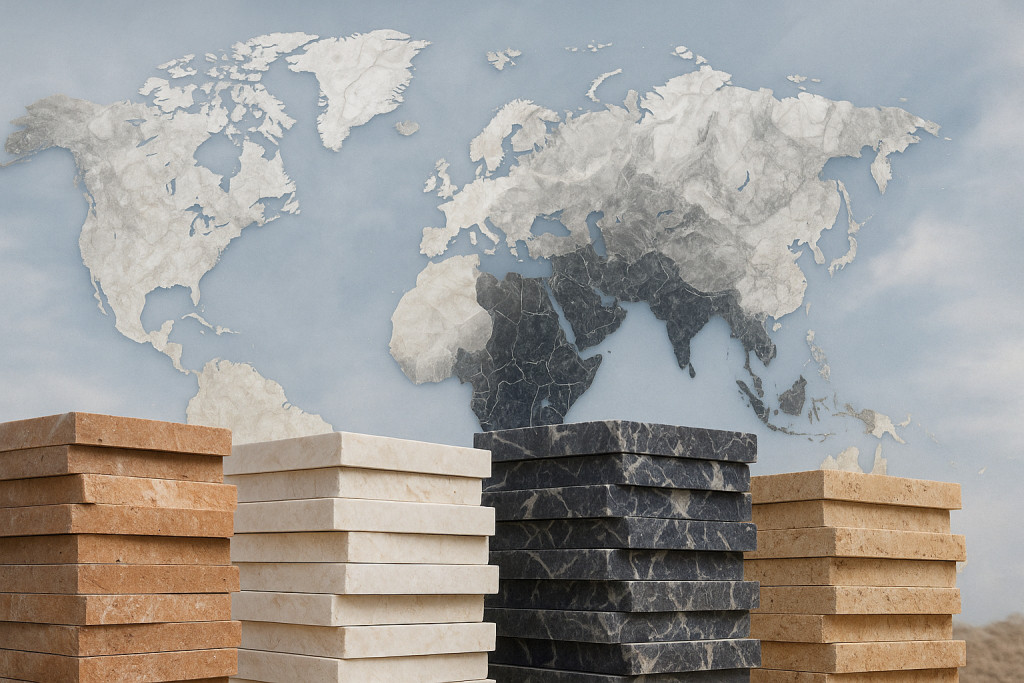
Every project begins with choosing the right material — a stone that unites natural beauty, strength, and character. Our collection is thoughtfully categorized by stone type, allowing architects, designers, and clients to explore the distinct qualities of each material in a clear and inspiring way.
From the refined beauty of Marble and the warm tones of Travertine, to the solid endurance of Granite, the soft charm of Limestone, and the luxurious depth of Onyx, every category shows stones carefully sourced from our own quarries and trusted suppliers across Iran. Each type is unique in texture, tone, and formation — shaped by nature over millions of years and perfected by our mastery.
This structure helps professionals and homeowners alike find stones that match both appealing preferences and technical needs such as durability, density, or surface finish. Whether your project requires large façade panels, interior flooring, or decorative applications, Karimi Stone provides consistency, careful cutting, and export-quality packaging.
Our mission is to bridge nature and design — bringing Karimi stone projects around the world! Explore our categories to discover how material, color, and mastery come together to define the natural beauty of stone.
Menu
Categories
Surface Finishes
- All Categories

Stone Categories
At Karimi Stone, we classify our natural stones by their geological origin, appearance, and application — helping architects, designers, and project managers easily identify the ideal material for every purpose. Each type of stone carries its own story, texture, and formation process shaped by nature over millions of years, then refined through careful cutting and careful finishing at our factories. Below is a brief introduction to our five main stone categories — Marble, Travertine, Limestone, Onyx, and Granite — each representing a unique combination of natural strength, color harmony, and design multi-purpose nature.
Marble
is one of the most celebrated metamorphic stones in the world — a material that perfectly bridges geological transformation and architectural refinement. It originates from limestone that endures intense heat and pressure deep within the Earth’s crust over millions of years. This process, known as metamorphism, recrystallizes the calcite (CaCO₃) grains, transforming a porous sedimentary rock into a dense, fine-grained crystalline structure. The result is a durable stone with characteristic veining patterns formed by impurities such as clay, iron oxide, or graphite, each contributing to its unique coloration and texture.
From ancient civilizations to modern design, marble has symbolized purity, permanence, and prestige. The Greeks and Romans used it for temples, sculptures, and monuments — testaments to its strength and timeless beauty. Today, marble remains a preferred choice for interior flooring, wall cladding, staircases, countertops, decorative panels, and luxury architectural elements.
Our marbles — including Pink Marble, Pietra Grey (Lashotor), Persian Silk, and Persian Scato — are internationally recognized for their mechanical strength, color stability, and fine texture. These varieties meet the demands of modern architecture while preserving the natural elegance and geological story that make marble one of nature’s most enduring masterpieces.
Travertine
Travertine is one of nature’s most beautiful and expressive stones — a material shaped slowly over thousands of years by water, minerals, and time. It forms when calcium carbonate from hot springs or underground rivers settles and hardens layer by layer. As water flows and air bubbles escape, small natural holes appear inside the stone. These tiny pores are what give travertine its warm, organic look and make every piece completely unique.
Travertine has been used since ancient times in architecture, from Roman amphitheaters to modern villas and hotels. Its natural tones — beige, cream, walnut, silver, and gold — blend easily with any design style, from classical to contemporary. Because it keeps a comfortable temperature and resists slipping, it is often chosen for facades, floors, stairs, courtyards, and pool areas.
After being extracted from the quarry, each block of travertine is carefully cut and finished. Some surfaces are filled and polished, while others are left unfilled and honed for a more rustic, natural touch. Other finishes like brushed, tumbled, or chiseled reveal the stone’s depth and texture in different ways.
Limestone
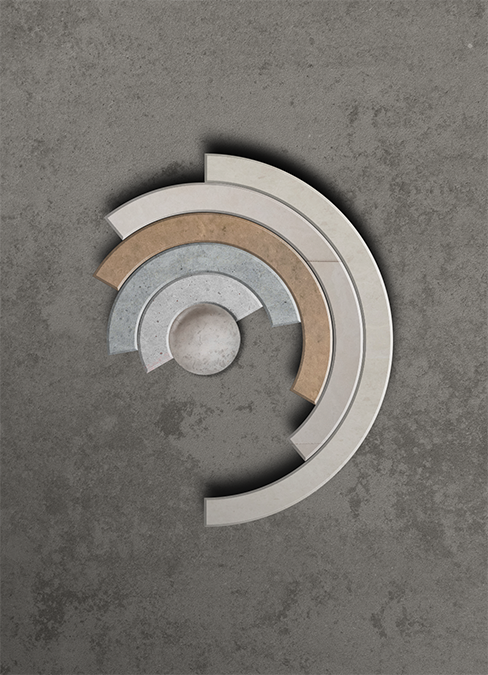
is one of the most widely used stones in human history — a material that connects the story of ancient seas to the modern built environment. It was first recognized and used by early civilizations such as the Egyptians and the Romans, who discovered its abundance and workability for building temples, monuments, and sculptures. Over millions of years, limestone forms from marine sediments, coral fragments, and the shells of microscopic sea organisms that settle on the ocean floor. Under immense pressure, these layers compact and harden, creating the soft yet durable sedimentary rock we know today as limestone.
From a geological point of view, limestone is primarily composed of calcium carbonate (CaCO₃), with traces of other minerals such as clay, iron oxide, and quartz. These natural elements determine its color range — from creamy white and beige to light grey or warm honey tones — and give it a smooth, consistent texture. Because of its ability to be cut, carved, and polished easily, limestone has served as one of the foundation stones of architecture for centuries.
In contemporary design, limestone continues to be valued for its natural calmness, thermal comfort, and adaptability. It provides an excellent balance between beauty and performance — cool underfoot in warm climates, yet strong and reliable for exterior applications. It is widely used in façades, flooring, wall cladding, staircases, and sculptural details, both in residential and commercial projects.
Onyx
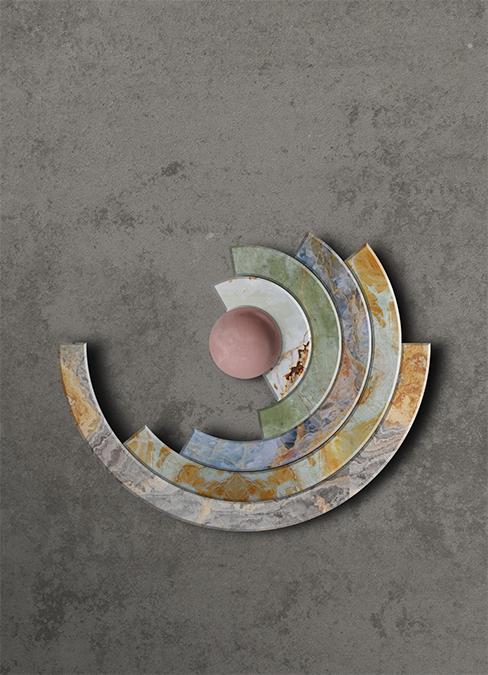
is one of the rarest and most visually striking stones found in nature. It is formed through a long geological process that takes thousands of years. The stone originates when calcium carbonate-rich water slowly flows through limestone caves or underground springs. As this water evaporates, thin layers of calcite crystals begin to deposit and harden one over another. Over time, these layers build up and create the stone’s signature banded structure — alternating lines of color that appear almost like brushstrokes in a painting.
Because the layers are made of pure calcite, onyx has a light-permeable structure – it allows light to pass through the surface. This is what gives the stone its natural glow and depth. Depending on the mineral content of the water, onyx can appear in a wide range of colors: white, honey, green, amber, pink, or caramel, often mixed in graceful patterns.
From a physical standpoint, onyx is a dense and compact crystalline stone, but it is softer and more delicate than granite or marble. For that reason, it is mainly used for interior design applications rather than exterior cladding. When used correctly, onyx delivers a level of beauty and sophistication unmatched by any other stone.
In modern architecture, onyx is widely used in feature walls, backlit panels, reception desks, bar counters, luxury bathrooms, and spa interiors. When light passes through it — whether natural sunlight or artificial LED — it creates a warm, glowing effect that enhances the entire atmosphere of the space. Many designers also use it for artistic furniture, tabletops, and partitions, where light interaction becomes part of the design concept.
Granite
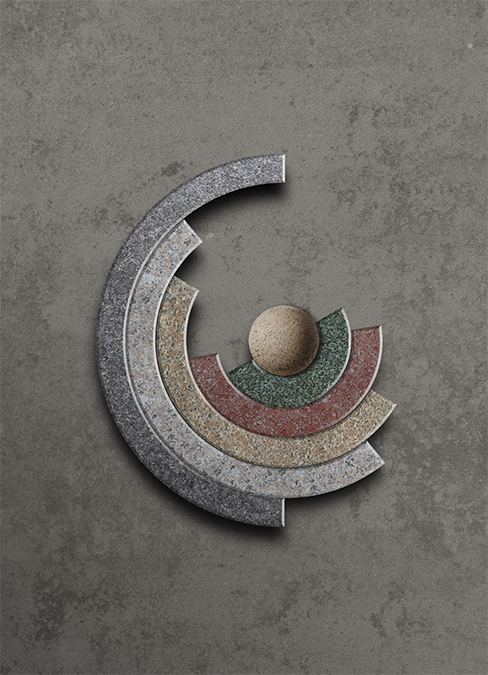
is a dense and durable igneous rock formed deep beneath the Earth’s surface through the slow crystallization of magma. Composed mainly of quartz, feldspar, and mica, it develops a hard crystalline texture that gives it exceptional strength and resistance to heat, pressure, and abrasion.
Its compact structure makes granite one of the most reliable materials for both interior and exterior architecture. It withstands heavy loads, temperature fluctuations, and exposure to moisture, which is why it is widely used in façades, flooring, countertops, stairs, bridges, and public spaces. In cold regions such as Russia, granite is highly valued for its frost resistance and long lifespan, maintaining its color and surface quality even after years of use.
Available in a broad range of colors — from black and grey to red, pink, and peach — granite provides versatility for both modern and classical design styles. Its natural crystalline grain adds depth and character, while its mechanical properties ensure long-term performance.
Granite remains one of the most trusted natural stones in architecture, combining beauty, endurance, and structural integrity in every application.
At Karimi Stone, our classification system helps clients find materials not only by type but also by finish and intended use. Each category can be customized with finishes such as polished, honed, brushed, bush-hammered, flamed, or tumbled to match the design intent.
We also pay attention to the environmental impact of stone production. Many of our materials are processed using water recycling systems and energy-efficient machinery to minimize waste. Our quarry teams extract blocks responsibly, following sustainable mining practices that protect both the environment and the surrounding communities.
We invite you to explore our full range and discover how each category — from the strength of granite to the subtle warmth of travertine — can bring character, function, and natural beauty to your next project.